
Why You Keep Losing Power in One Room
There is a distinct kind of frustration that comes with a power outage that affects just one corner of your home. Everything else is functioning perfectly—the lights are on in the kitchen, the television is running in the living room—but the lights are off and the outlets are dead in the spare bedroom or the garage. This targeted power loss can feel baffling, suggesting a mysterious flaw in your home’s electrical system. Unlike a total blackout, which points to a utility problem, losing power in a single room is a clear indication that a safety mechanism has activated or a fault has occurred within a specific circuit. For homeowners in Felton and the surrounding Santa Cruz Mountains, understanding the source of this localized problem is key to resolving it safely and permanently. It is a sign that your electrical system is reaching its limit, and ignoring the issue can lead to more serious and potentially dangerous complications.
The Most Common Culprit: Circuit Overload
The overwhelming majority of localized power losses are caused by a simple circuit overload. Your home’s electrical system is organized into circuits, each protected by a circuit breaker rated for a specific amount of electrical current, usually 15 or 20 amps. This rating is the maximum load the circuit’s wiring can safely handle without overheating. When you plug in an appliance, it draws current. When the total current drawn by all devices on that circuit exceeds the breaker’s rating, the breaker trips, cutting power to prevent the wires from melting and causing a fire.
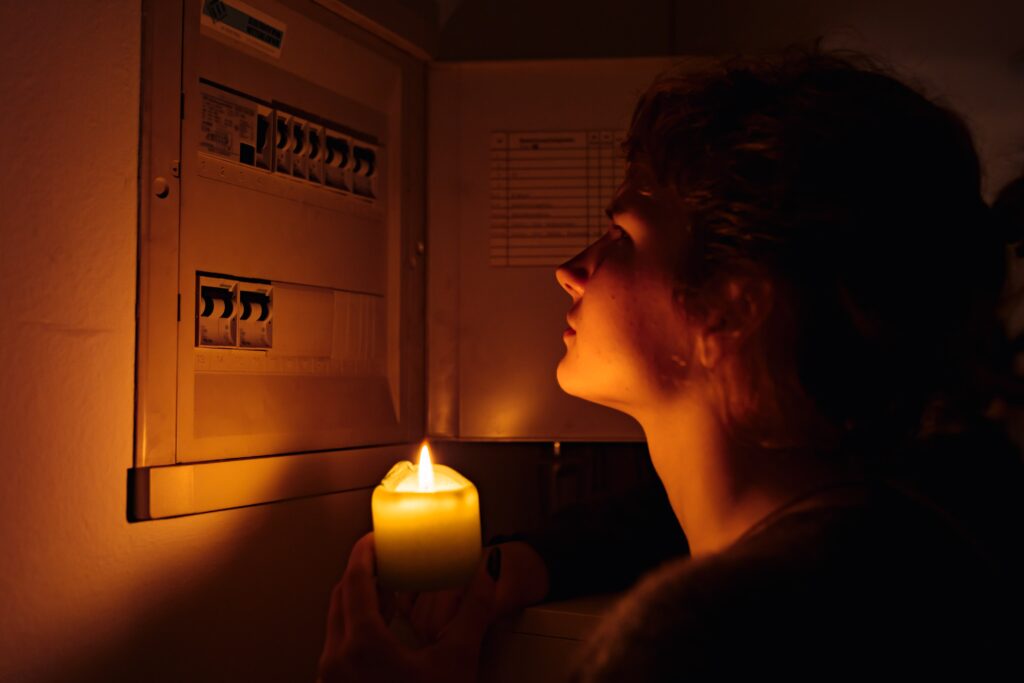
The problem often goes unnoticed until the winter months when heating loads increase, or until a room is repurposed, such as turning a guest room into a heavy use home office. You may not realize that a single circuit is powering all the outlets in both a bedroom and a hallway. If you plug in a high-demand device like a space heater, a powerful vacuum cleaner, or a laser printer into one outlet, the current draw is immediate and massive. If the rest of the circuit is already supporting a computer, a television, and several lights, the combined load pushes the system over the edge.
The space heater is the most common device to trigger this in winter. A typical space heater draws about 12.5 amps. If it is plugged into a 15-amp circuit that is already carrying 3 or 4 amps from other devices, the total load instantly exceeds 15 amps, tripping the breaker. The solution is not to repeatedly reset the breaker, but to identify the high-demand devices and redistribute them to separate circuits. If that is not possible, the permanent solution is to install a dedicated circuit to handle the specific needs of that room.
The Mystery of a Tripped GFCI Outlet
Sometimes, the power loss is not caused by a breaker trip in the main panel, but by an activated Ground Fault Circuit Interrupter, or GFCI, outlet. GFCIs are safety devices that monitor the flow of electricity. They are designed to shut off power instantly if they detect an electrical leak to the ground, which typically happens when a person touches a faulty appliance or when water enters the circuit. Because they are designed to prevent electrocution, GFCIs are required in kitchens, bathrooms, garages, basements, and all outdoor areas.
The confusing part for homeowners is that a single GFCI outlet often protects all downstream outlets on that circuit. If a GFCI outlet trips in your garage due to moisture, it might cut power not only to the garage outlets, but also to the outdoor patio outlets and perhaps a few outlets in an adjacent mudroom or bathroom. The power loss appears isolated to those few rooms, even though the source of the trip is in a single, remote location.
Need an outlet install? Click here for our outlet installation service.
This is particularly common in wet, coastal climates like ours. Heavy rain can infiltrate an outdoor receptacle, which instantly trips the GFCI protecting that circuit. The key is to locate the GFCI that has tripped. It will have small “Test” and “Reset” buttons on its face. If you find a tripped GFCI, press the “Reset” button. If the power comes back on, you have solved the mystery. If it immediately trips again, there is still moisture or an electrical fault present in the circuit, and you need a professional to trace the fault and inspect the wiring for water damage.
A Faulty Receptacle or Switch
When a circuit is not overloaded and the GFCI has not tripped, the power loss may be traced to a single failing component within the room itself. Electrical components like switches and outlets do not last forever. They are subject to wear, tear, and corrosion, especially in older homes. A common cause of localized power loss is a broken wire connection at an outlet or a faulty switch.
When a screw terminal holding a wire to the back of an outlet loosens, it creates high electrical resistance, which generates heat. This heat can eventually melt the plastic housing of the receptacle or cause the wire itself to break off completely, interrupting the flow of power to that outlet and anything further down the circuit. This is known as an “open neutral” or “open hot” condition. You might find that the outlet itself is dead, and the power loss stops right there. If the faulty outlet is early in the circuit, it can cut power to the entire room and all its subsequent outlets.
Similarly, a wall switch that controls a light or an outlet can fail internally. The spring mechanism or the internal contacts can wear out or become corroded. When you flip the switch, it fails to make a complete connection, and the lights or outlets controlled by it remain dark. A failing component often presents itself with symptoms like flickering lights, buzzing sounds, or an outlet that is warm to the touch before the power cuts out completely. If you notice any of these warning signs, it is critical to call an electrician before the component fails completely or, worse, starts a fire.
Rodent Damage and Physical Interruption
A more unusual, but distressingly common, reason for localized power loss in the Felton area involves pests. As temperatures drop and the weather gets wetter, mice, rats, and squirrels seek warm, dry refuge inside the walls, attics, and crawl spaces of homes. Unfortunately, these spaces are also where the electrical wiring runs. Rodents instinctively gnaw on materials to keep their teeth sharp, and electrical wiring insulation is often a favorite target.
When a rodent chews through the insulation, it can expose the bare copper wires. If the rodent chews completely through the wire, it creates a break in the circuit, and power is lost to everything downstream of that point. If the chewed wire simply touches another grounded surface, like a water pipe or a metal duct, it can cause a short circuit that immediately trips the breaker.
Want to know the pros and cons of wiring an older home? Click here for more information.
Rodent damage is serious because the break in the power is accompanied by a severe fire risk. A partially chewed wire can arc, generating intense heat inside the wall cavity. Diagnosing this problem is difficult because the damage is hidden. Symptoms include hearing scratching noises in the walls, frequent tripping of a breaker that serves an area with high pest activity, or discovering sections of the house where power is lost. Remediation requires an electrician to visually inspect the attic and crawl spaces, safely repair the damaged section of the wire, and ensure the splices are made in an accessible, code-compliant junction box.
The Legacy of Aluminum Wiring
For homeowners in older properties, the cause of power loss may be tied to the legacy of aluminum wiring, which was used in some homes during a brief period in the 1960s and 1970s. While some of this wiring remains safe, connections involving aluminum are notoriously failure-prone, leading to localized power loss and fire hazards.
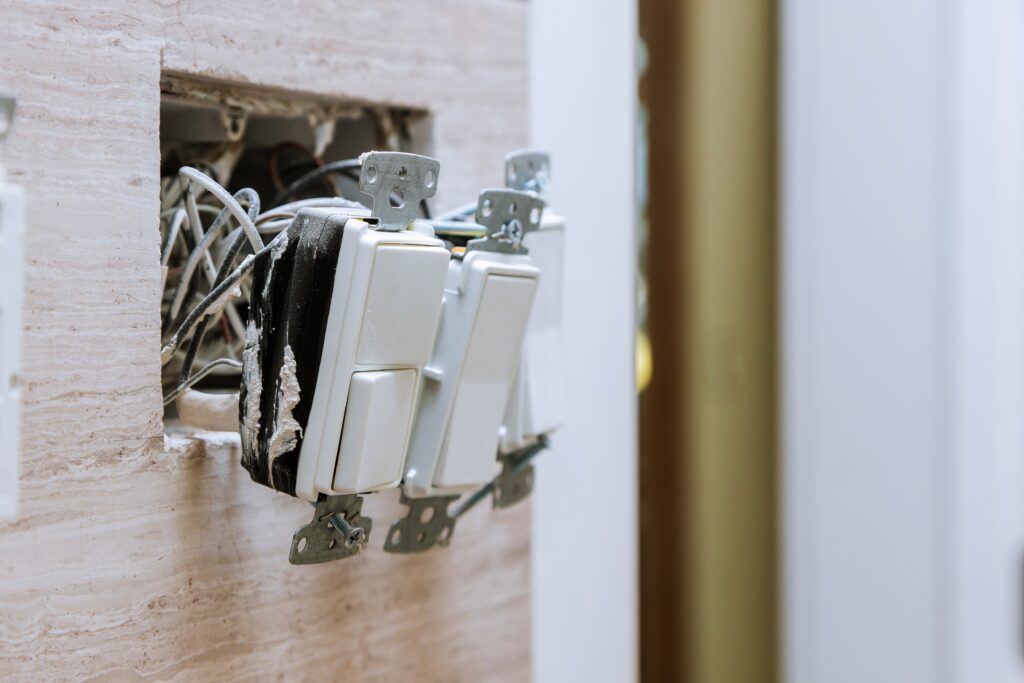
Aluminum wiring expands and contracts much more dramatically than copper wiring when it heats up and cools down. Over decades, this constant movement causes the screw terminals on outlets and switches to loosen. This loose connection leads to high resistance, which in turn causes the connection to heat up. The oxidation on the aluminum surface also acts as an insulator, further increasing resistance and heat. This runaway thermal cycle leads to a complete failure of the connection, cutting power to the room.
If your home has aluminum wiring and you are experiencing flickering lights or power loss in a single room, you are facing a serious safety issue that goes beyond a simple overload. Aluminum wiring failure requires specialized repair by a licensed electrician, often involving the installation of special copper pigtails or crimp connectors to safely transition the aluminum wire to the terminals.
Losing power in a single room is a clear, actionable signal from your home’s electrical system that something is wrong. In the majority of cases, it is a sign of an overloaded circuit, easily solved by redistributing high-demand appliances. However, it can also point to more serious underlying issues such as a tripped GFCI, a failing outlet or switch, or dangerous wire damage caused by pests or the structural shortcomings of older aluminum wiring. Never ignore a localized power loss, and never attempt to bypass the safety mechanism of a circuit breaker or GFCI. If the power does not restore after one reset attempt, the safest and most responsible action is to contact a licensed electrician who can properly diagnose the fault, ensure code compliance, and restore power safely and reliably.