
Are DIY Electrical Repairs Legal in California?
In an age of endless online tutorials and home improvement television, the temptation to tackle home repairs yourself is stronger than ever. Many homeowners in Felton and throughout California take pride in their self reliance, and the potential to save money on labor costs is a powerful motivator. While projects like painting a room or installing a shelf carry little risk, electrical work is an entirely different category. Electricity is an invisible, powerful, and unforgiving force. A single mistake can have consequences that are not only costly but also catastrophic. This leads to a critical question for any homeowner: is it even legal to perform your own electrical repairs in California? The answer is a complex one, balancing a homeowner’s rights with the state’s stringent safety requirements.
The “Owner Builder Exemption” in California
The short answer to the question is yes, it is often legal for a homeowner to perform electrical work on their own property. California law provides an “owner builder exemption,” which allows you to act as your own general contractor for projects on your own home. This exemption means you can perform the work yourself, without holding the C-10 Electrical Contractor license that is legally required for any professional you would hire. This right, however, comes with significant and binding responsibilities that many homeowners fail to understand.
This exemption is not a free pass to do whatever you want. It is narrowly defined. It applies to you, the owner of the property, working on your principal place of residence. It does not mean you can hire your unlicensed friend or a general handyman to run new circuits. If you are paying someone to do the work, they must be a licensed contractor. If you are doing the work yourself, you become personally responsible for every single aspect of the project, just as a licensed professional would be.
The most important part of this responsibility is that your legal right to do the work does not exempt you from the law. Your work must, without exception, adhere to the California Electrical Code, or CEC. The CEC is a massive, highly technical document, based on the National Electrical Code (NEC), with specific additions for California. It dictates every detail of an installation, from the gauge of the wire and the type of breaker to the spacing of outlets and the required safety devices. A professional electrician spends years learning and applying this code; a homeowner is expected to know and follow it perfectly from day one.
The Permit and Inspection Process
The mechanism for enforcing the California Electrical Code is the permit and inspection process. Your legal right to do your own work is fully dependent on your compliance with this process, which is managed by your local building department, such as the Santa Cruz County Planning Department. Bypassing this step is what makes DIY work definitively illegal, and it carries severe consequences.
So, what requires a permit? While simple tasks like swapping an existing light fixture or replacing a single outlet in the same location are often exempt, almost anything else requires one. This includes, but is not limited to, installing a new circuit, adding any new outlet or light, moving an existing outlet, upgrading your main electrical panel, installing a subpanel, or running power for a major appliance like an EV charger or hot tub. Essentially, any work that alters or adds to your home’s fixed wiring system must be permitted.
Need switches or outlets replaced? Click here to see why you should replace them.
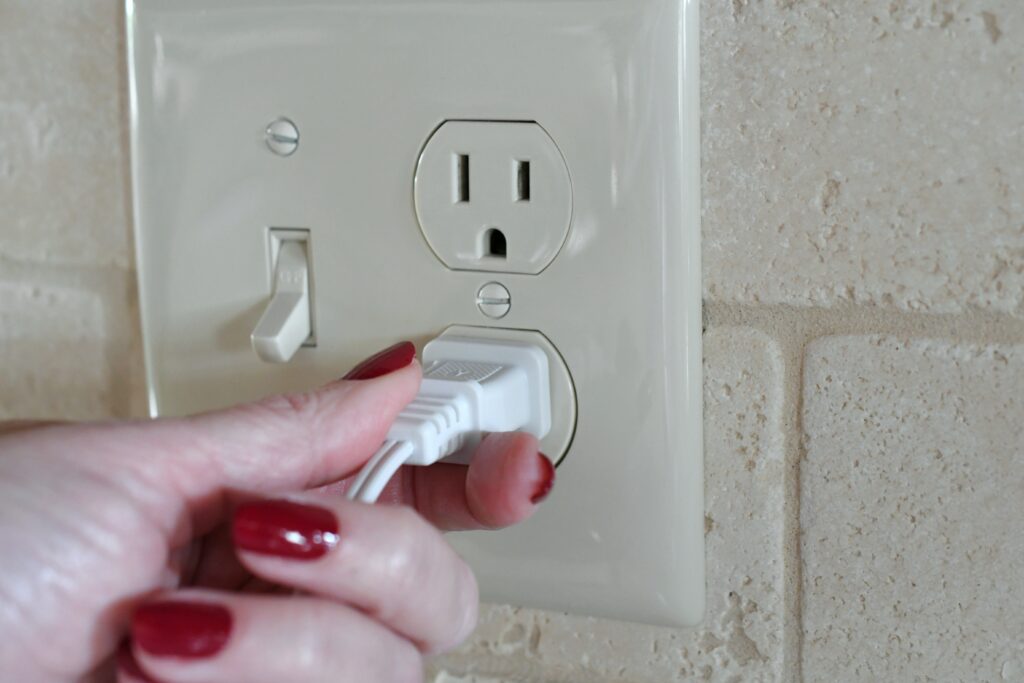
The process for an owner builder is the same as for a contractor. You must submit an application, pay the required fees, and often provide a plan or diagram of the work you intend to perform. Once the permit is issued, you can begin the work. When you are finished, you must call the county to schedule an inspection. An inspector will come to your home and scrutinize your work. It is crucial to understand that the inspector will not “go easy” on you because you are a homeowner. They are legally obligated to hold your work to the exact same standard as that of a C-10 licensed electrician with 30 years of experience. They are checking for code compliance to ensure your home is safe.
If your work fails the inspection, you will be given a list of corrections that must be made. You will then have to fix the problems and pay for a re inspection. This cycle can repeat, costing you significant time and money until the installation is perfect. This is where the “savings” of DIY often evaporate. A professional gets it right the first time, passing inspection immediately.
The Immense Risks of DIY Electrical Work
Even if you follow the legal path of permitting, the physical and financial risks are enormous. Electricity is not intuitive, and the dangers are hidden. A plumbing leak is obvious; you see the water. A faulty electrical connection can look perfectly fine but harbor a life threatening hazard that may not reveal itself for months or even years.
The most significant risk is fire. Faulty electrical wiring is a leading cause in residential fires. A connection that is not torqued down properly, a wire that is nicked during stripping, or the wrong size wire used for a circuit breaker can all create a point of high resistance. This resistance generates immense heat under load, such as when you plug in a space heater or vacuum. This heat builds up inside your wall, slowly charring the wood studs until it ignites. This is not a theoretical danger; it is a tragic reality that licensed electricians are trained to prevent.
Need emergency electrical services? Click here to see our emergency electrician page.
The second risk is electric shock and electrocution. A mis wired outlet or switch can electrify a fixture, an appliance, or a cover plate. Not understanding the critical role of the grounding system, or improperly installing safety devices like GFCIs (Ground Fault Circuit Interrupters) and AFCIs (Arc Fault Circuit Interrupters), can turn a simple appliance fault into a deadly incident. Professionals with advanced safety training, such as the 70E and OSHA 30 certifications held by Beach Electrical, understand these hazards and follow strict protocols to ensure the work is safe, both during installation and for decades after.
Finally, there is the risk of damaging your expensive electronics. Modern homes in the San Jose and Santa Cruz areas are filled with sensitive computers, smart televisions, and high end appliances. An incorrect voltage connection or a floating neutral can send the wrong amount of power to these devices, instantly destroying thousands of dollars worth of equipment.
The Hidden Financial Consequences
The primary motivation for DIY is saving money, but it can often have the opposite effect. The most devastating financial risk involves your homeowner’s insurance. If you perform unpermitted electrical work and that work later causes a fire, your insurance company has every right to investigate. When they discover the work was done without a permit and inspection, they can deny your entire claim. You could lose your home and everything in it, all to save a few hundred dollars on a project.
The second major financial pitfall surfaces when you decide to sell your home. During the sale process, the buyer will hire a home inspector. These inspectors are trained to spot non standard, unpermitted work, especially in the electrical panel and attic. When this work is found, it becomes a major red flag. You will be required to disclose it, and buyers may walk away entirely. At best, the buyer will demand that the work be torn out and redone by a licensed, professional electrician before the sale can close. This leaves you paying a premium for an emergency repair, completely erasing any initial savings.

Even if you get a permit, the costs can add up. The multiple trips to the hardware store for the wrong parts, the purchase of specialized tools you may only use once, and the fees for failed re inspections can quickly equal or exceed the cost of hiring a professional who would have completed the job efficiently and correctly.
The Professional Alternative: Safety and Accountability
While California law may technically allow you to perform your own electrical work, it is a legal right that comes with profound responsibilities and risks. The law presumes you will act as a professional, adhering to thousands of pages of complex codes and passing a rigorous inspection. The smallest mistake can compromise the safety of your family, invalidate your insurance, and damage your home’s value.
Hiring a licensed, insured, and experienced electrician is not just paying for labor; it is paying for safety, accountability, and peace of mind. A professional with a C-10 license, like Beach Electrical, has proven their expertise to the state. Their 30 plus years of experience mean they have seen and solved every problem imaginable. Their insurance protects your property, and their license holds them accountable for the quality of their work. They handle the permits and guarantee the work will pass inspection. They complete the job safely and efficiently, often in a few hours, saving you a weekend of stress and uncertainty.
So, is DIY electrical work legal in California? Yes, under the owner builder exemption, it can be. But the real question is not one of legality; it is one of wisdom. The legal right to do the work does not protect you from the physical or financial consequences of doing it incorrectly. The California Electrical Code is not a set of friendly suggestions; it is a legal standard written to prevent tragedy. When you consider the extreme risks of fire, shock, insurance denial, and failed home sales, the perceived savings of DIY electrical work are rarely worth the gamble. For the safety of your home and family in Felton, Santa Cruz, and beyond, the only smart choice is to trust a professional.