
3 Energy-Efficient Upgrades for CA Homes
California residents understand the importance of energy conservation. With rising utility costs and a strong statewide focus on sustainability, homeowners are constantly seeking ways to reduce their energy consumption. This not only helps the environment but can also lead to significant financial savings. While many focus on large scale projects, some of the most effective changes are electrical. Upgrading your home’s electrical components can provide a massive return on investment, enhancing comfort and efficiency simultaneously. These modernizations range from simple lighting swaps to integrated smart home systems. Choosing the right upgrades and ensuring they are installed professionally is key to unlocking their full potential. For homeowners in Felton and the Santa Cruz area, these improvements are a practical way to modernize a property, boost its value, and lower monthly bills.
Upgrade Your Home with LED Lighting
One of the most immediate and impactful energy-efficient upgrades is the transition to Light Emitting Diode, or LED, lighting. For decades, the standard for homes was the incandescent bulb, a technology that wastes an enormous amount of energy. Incandescent bulbs work by heating a filament until it glows, releasing about 90% of its energy as heat, not light. This inefficiency is a major drain on a home’s electrical system and contributes to higher cooling bills in the warmer months. LED technology, by contrast, is fundamentally different. It uses a semiconductor to convert electricity directly into light, a process that is incredibly efficient and produces very little waste heat.
The numbers are compelling. Quality LED bulbs use at least 75% less energy than their incandescent counterparts to produce the same amount of light, with many models reaching 80% or 90% efficiency. This translates directly to a lower electricity bill, month after month. Furthermore, the lifespan of an LED is staggering compared to older technologies. A typical incandescent bulb may last for 1,000 to 2,000 hours. A quality LED, however, can last 25,000 to 50,000 hours or more. This means a single LED bulb can last for decades, eliminating the constant cost and hassle of purchasing and replacing bulbs. The long term savings from both reduced energy use and replacement costs make LED lighting a clear financial winner.

An LED upgrade is not just about screwing in a new bulb. Homeowners have several options. The simplest is a direct lamp replacement, where existing bulbs are swapped for LED versions with the same base. A more advanced option is an LED retrofit, where existing fixtures, like recessed cans, are updated with a modern LED module. This often improves the look and performance of the fixture. The most comprehensive approach is installing new, dedicated LED fixtures. This is ideal for renovations or new construction, allowing for the integration of sleek, modern lighting designs like under cabinet strips, landscape lighting, and security lights.
Beyond the savings, modern LED lighting offers superior quality and control. Gone are the days when LEDs were known only for a harsh, blue white light. Today, they are available in a full spectrum of color temperatures, from a warm, cozy glow identical to incandescent bulbs to a bright, neutral white light perfect for kitchens and workspaces. Many LEDs are also fully dimmable, allowing you to set the perfect ambiance for any room without the humming or flickering associated with older dimmers. Upgrading outdoor and landscape lighting to LED not only saves energy but also enhances safety and security, illuminating pathways and perimeters reliably for years without maintenance.
Embrace Smart Home Technology
The next level of home energy management involves integrating smart home technology. These systems provide homeowners with unprecedented control over their home’s energy consuming devices, primarily lighting and HVAC systems. A smart home is not about futuristic gadgets; it is about automation and data. By automating routine tasks and providing clear insights into energy usage, these systems actively eliminate waste and optimize comfort. A professional electrician can integrate these technologies seamlessly into a home’s existing electrical framework, creating a centralized and intelligent management system.
Want to see more electric upgrades that can increase the value of your home? Click here.
The single most effective smart home device for energy savings is the smart thermostat. In a typical California home, heating and cooling account for the largest portion of the energy bill. Traditional thermostats, even programmable ones, are often inefficient. They rely on rigid schedules that do not adapt to real life. A smart thermostat learns your family’s patterns. It understands when you are home, when you are away, and when you are sleeping. It can use geofencing to detect when your smartphone is approaching the house and begin heating or cooling the space just in time for your arrival. This adaptive learning means your HVAC system runs only when it is truly needed, cutting significant waste. Studies show that a properly configured smart thermostat can save homeowners 8% to 23% on their heating and cooling costs.

Smart lighting controls work on a similar principle. While LED bulbs save energy by being efficient, smart lighting saves energy by ensuring lights are not on when they are not needed. This can be achieved through several components. Smart switches and dimmers allow you to control any light fixture from your phone or with your voice. You can set detailed schedules, so porch lights turn on at dusk and off at dawn automatically. Motion or occupancy sensors are perfect for rooms like bathrooms, laundry rooms, and closets. They turn the lights on when someone enters and automatically turn them off after a period of inactivity, eliminating the common problem of lights being left on by mistake.
The true power of smart home technology is the data it provides. Many smart systems come with an app that shows you exactly how much energy you are using and where. You can see which circuits or devices are the biggest consumers. This information empowers you to make informed decisions and find new ways to save. Smart systems can also control “vampire loads.” This is the standby power consumed by electronics even when they are turned off. Smart plugs and power strips can be programmed to cut power completely to entertainment centers or home office equipment at night, stopping this silent energy drain. For residents in the tech forward Bay Area and Santa Cruz County, a smart home is a logical step toward a more efficient, convenient, and modern lifestyle.
Install a Home EV Charger
California leads the nation in the adoption of electric vehicles (EVs). As more homeowners in Felton and beyond make the switch, the question of charging becomes paramount. While every EV can be charged using a standard 120 volt wall outlet, known as Level 1 charging, this method is extremely slow. It can take 24 hours or more to fully charge a vehicle, providing only 3 to 5 miles of range per hour. This is simply impractical for most drivers. The definitive solution is a professionally installed Level 2 EV charger. This upgrade is essential for any EV owner and is a significant step in managing home energy use efficiently.
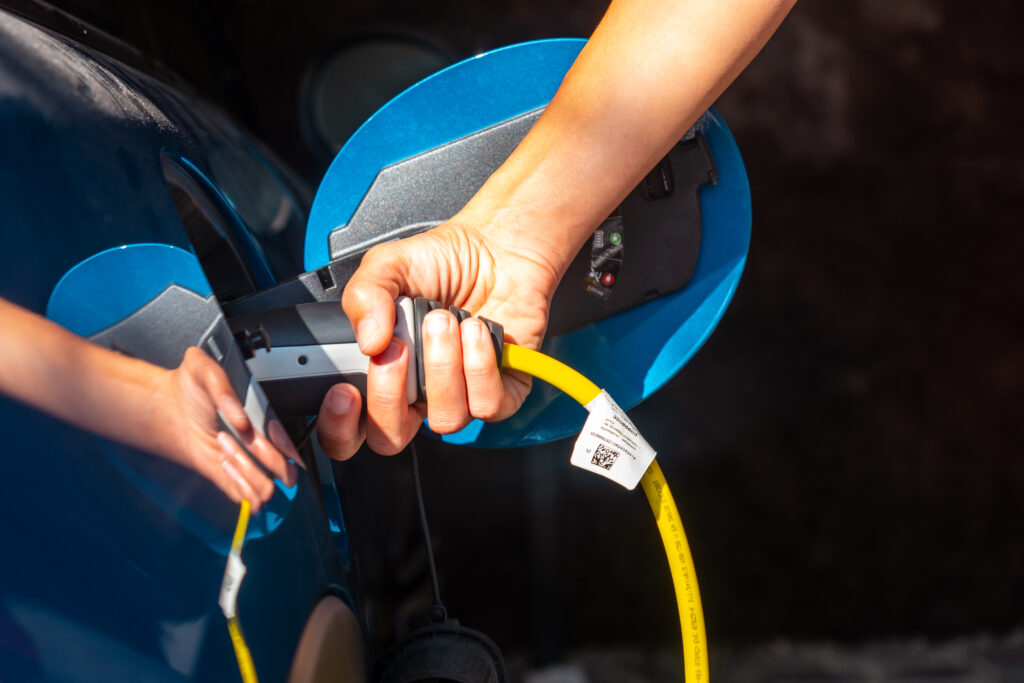
A Level 2 charger uses a 240 volt circuit, similar to an electric dryer or oven. The difference in performance is dramatic. These chargers can deliver 15 to 40 miles of range per hour, fully charging most EVs overnight. This convenience is the primary benefit; you wake up every morning with a full “tank.” You are no longer reliant on the availability and pricing of public charging stations. This upgrade requires the expertise of a licensed electrician. A professional must run a new, dedicated circuit from your electrical panel to the charging location, often the garage. This ensures the system can handle the high, sustained power draw safely without overloading your home’s electrical system. This is not a DIY project; improper installation poses a significant fire risk.
Do you need an electrician immediately? Click here to see signs of when to call for servicing.
The energy efficiency of a home charger is tied directly to cost. Public charging stations are a business. They charge a premium for their service and convenience. In California, the average cost of home electricity is significantly lower than the average cost at a public station. Home charging might cost around 17 cents per kilowatt hour, while public chargers can average 37 cents or more. This means you can cut your “fueling” costs by more than half simply by charging at home. Furthermore, utility companies often offer Time of Use (TOU) plans. These plans provide much cheaper electricity rates during off peak hours, typically overnight. A Level 2 charger, especially a smart charger, can be programmed to charge your vehicle only during these cheapest periods, further maximizing your savings.
Installing a home EV charger is also a powerful investment in your property. As EVs become the standard, a built in charger is becoming a highly sought after feature for homebuyers. It is a future proof upgrade that adds tangible value to your home. A professional installation by a company like Beach Electrical ensures the charger is correctly sized for your vehicle, compliant with all local electrical codes, and eligible for any potential rebates or incentives. It provides peace of mind that your vehicle is charging safely and efficiently, ready for your daily commute. This upgrade transforms an EV from a vehicle dependent on public infrastructure to a seamless part of your home’s ecosystem.
Making your California home more energy efficient is a wise investment that pays dividends in both long term savings and immediate comfort. By focusing on key electrical upgrades, you can tackle the largest sources of energy waste in your home. Switching to LED lighting provides an immediate and dramatic reduction in energy use from illumination, with bulbs that last for decades. Embracing smart home technology, particularly smart thermostats and lighting controls, automates your savings by ensuring you only use energy when and where it is needed. For the growing number of electric vehicle owners, a professionally installed Level 2 charger offers unparalleled convenience and significantly lower fueling costs. These three upgrades work together to create a modern, responsible, and economical home. To ensure these systems are installed safely and correctly for optimal performance, it is essential to partner with a licensed and experienced electrician.