
5 Electrical Fire Risks and How To Prevent Them
Your home is your sanctuary, the one place in the world where you and your family should feel completely safe and secure. We fill our homes with modern conveniences and technologies that make our lives easier and more enjoyable, all of which are powered by a silent and invisible force: electricity. While we rely on it every single day, it is a powerful force that demands respect. An electrical system that is outdated, damaged, or improperly used can pose one of the most significant and dangerous threats to that sense of security.
According to the National Fire Protection Association (NFPA), electrical failures or malfunctions are a leading cause of residential fires in the United States, responsible for thousands of fires, hundreds of injuries, and over a billion dollars in property damage each year. The most sobering part of that statistic is that the vast majority of these devastating fires are preventable. By understanding the most common electrical fire risks, learning to recognize their warning signs, and taking proactive steps to address them, you can protect your home and your family from this hidden danger.
Risk #1: Outdated and Damaged Wiring
The wiring system is the circulatory system of your home, and just like any other part of a house, it has a finite lifespan. The wiring installed in a home decades ago was not designed to handle the immense electrical loads of our modern, device-heavy lifestyles, and the materials themselves can degrade over time, creating a serious fire hazard. This is a particular concern in the beautiful, older homes found throughout the Felton area and the Santa Cruz Mountains.
One of the most well-known types of outdated wiring is knob-and-tube, found in homes built before the 1950s. While it can function for a time, it lacks a critical safety feature, a ground wire, and its insulation is often old and brittle. Another problematic type is aluminum wiring, which was used for a period in the 1960s and 70s. Aluminum is prone to dangerous overheating at connection points if not handled with specialized techniques. Even modern copper wiring can be a hazard if it has been damaged by rodents chewing on the insulation or accidentally nicked during a past renovation.
The warning signs of faulty wiring can be subtle. They include circuit breakers that trip frequently, a persistent burning smell that you cannot locate, sizzling or buzzing sounds coming from your outlets, or lights that noticeably dim or flicker when a large appliance like a microwave or air conditioner turns on. The only safe way to address these issues is with a professional inspection. A licensed electrician can assess the condition of your home’s wiring and, if necessary, perform a partial or full home rewire to bring your system up to modern, safe standards.
In need of rewiring? Click to learn more.
Risk #2: Overloaded Circuits and Electrical Panels
Our demand for electricity has grown exponentially over the past few decades. A home that was perfectly equipped to handle the electrical needs of a family in 1980 is often dangerously under-equipped for the demands of a modern family with multiple computers, large-screen televisions, high-power kitchen appliances, and a host of other electronic devices. This mismatch can lead to overloaded circuits and electrical panels, which is a major cause of electrical fires.

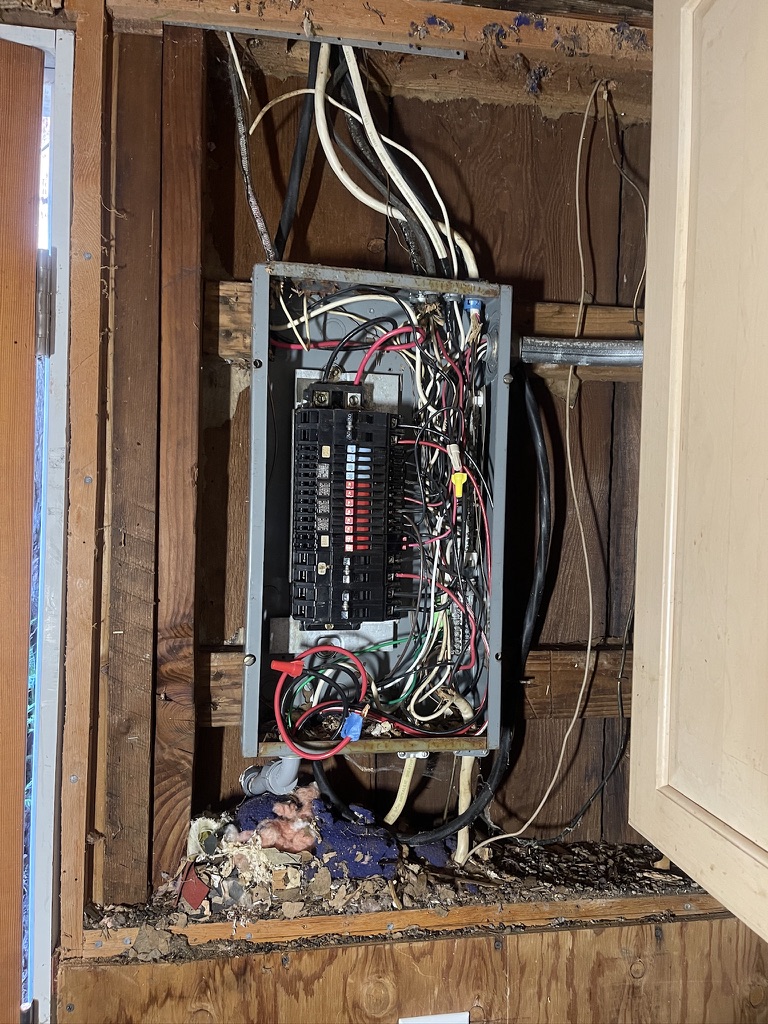
An overloaded circuit occurs when you try to draw more electrical current through a wire than it is rated to safely handle. The wire then begins to overheat, and this excessive heat can cause the wire’s protective insulation to melt, leading to a fire inside your walls. The most obvious warning sign of an overloaded circuit is a breaker that trips on a regular basis. This is your electrical panel’s safety mechanism working perfectly, telling you that there is a persistent problem that needs to be addressed. Other signs include outlets or switch plates that are warm to the touch, a burning odor coming from an outlet or the panel, or scorching and discoloration around the plugs of your appliances.
The prevention for this hazard is a combination of smart habits and professional upgrades. Be mindful of how many high-power devices you have plugged into a single circuit. More importantly, the safe, long-term solution is to have a licensed electrician install new, dedicated circuits for your major appliances. For many older homes, a full electrical service panel upgrade is necessary to safely handle the home’s total modern electrical load.
Need an electrical panel upgrade? Click to learn more.
Risk #3: Misuse of Extension Cords and Power Strips
The extension cord is a tool of incredible convenience, but it is also one of the most commonly misused electrical devices in the home. It is essential to understand that extension cords and power strips are designed and rated only for temporary, short-term use. When they are pressed into service as a permanent wiring solution, they become a significant and persistent fire hazard.
The internal wires of an extension cord are thinner than the permanent wiring in your walls, and they can easily overheat if they are overloaded, especially when used with a high-draw appliance like a portable space heater or an air conditioner. This is a very common cause of electrical fires. Furthermore, the cords themselves are not designed for long-term wear and tear. When they are run across floors, under rugs, or pinched by furniture, their insulation can become damaged, exposing the live wires. Running a cord under a carpet is particularly dangerous, as it not only conceals any potential damage but also traps the heat the cord generates, creating a perfect recipe for a fire.
The only safe and permanent solution for getting power to a location that does not have an outlet is to have one professionally installed. For temporary use, always choose a cord that is rated for the power of the appliance you are using, and never plug a major appliance into a simple light-duty cord. Never run cords under rugs, and never plug multiple power strips or extension cords together in a practice known as “daisy-chaining.”
Click to learn more about having more outlets added to your home.
Risk #4: Faulty Outlets, Switches, and Fixtures
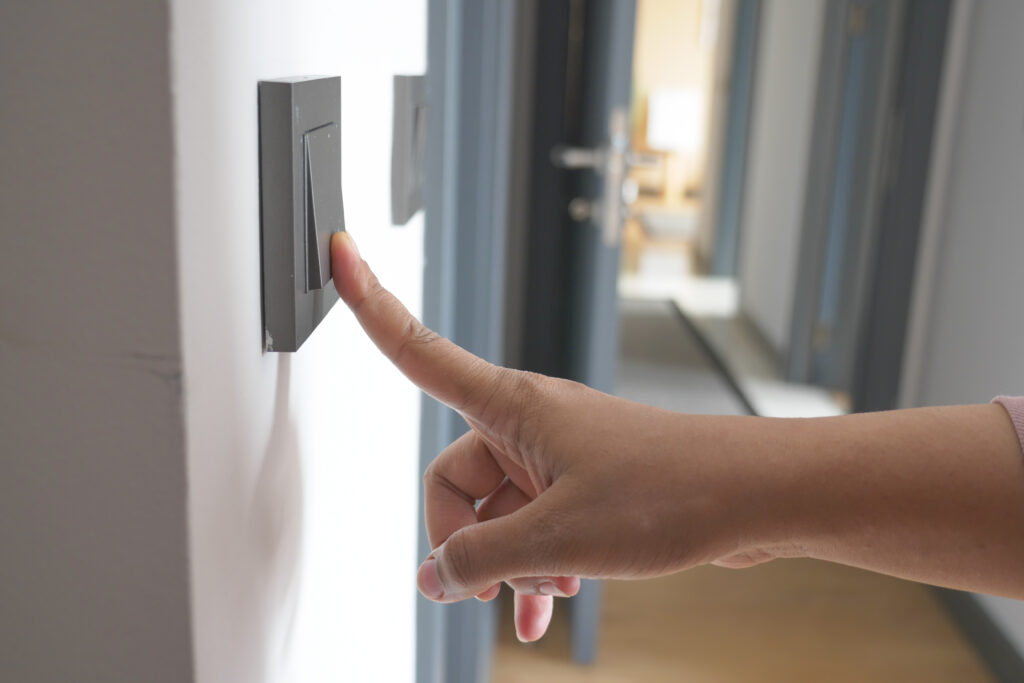
Your outlets and switches are the points of contact where you interact with your electrical system, and they are also common points of failure that can lead to a fire. Over time, the internal connections in an outlet or switch can become loose, or the receptacle itself can wear out.
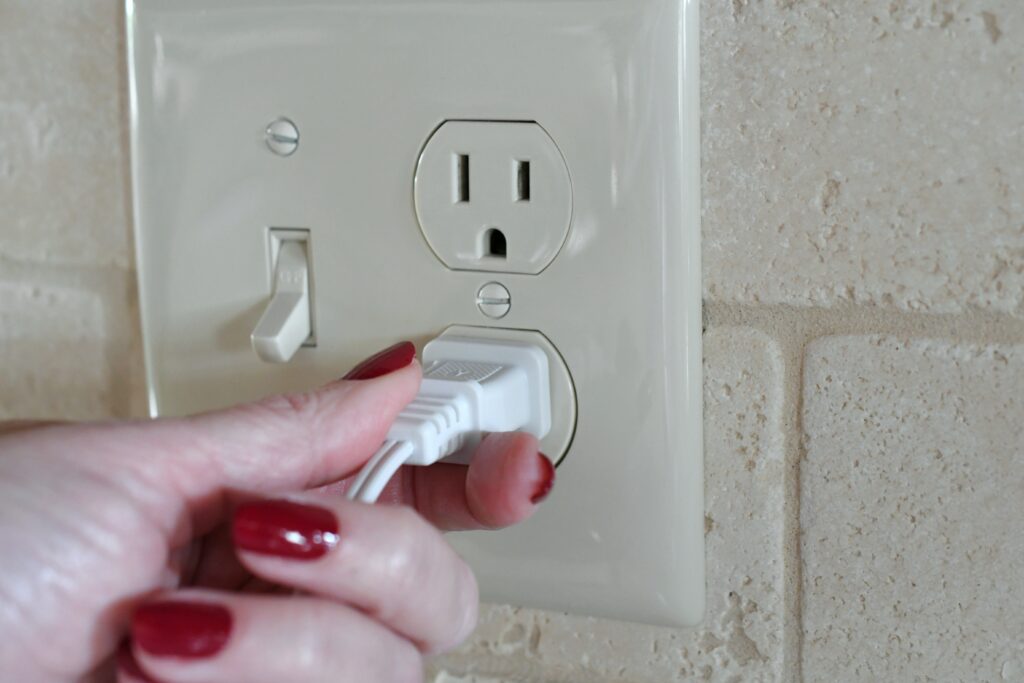
When the wire connections behind an outlet become loose, it can create a very dangerous condition known as an arc fault. An arc is essentially a small, continuous spark of electricity that jumps across a tiny gap. This arc can generate incredibly high temperatures; hot enough to ignite the surrounding wood framing or insulation inside your wall. A worn-out outlet that can no longer grip a plug firmly can also cause arcing at the point of connection.
The warning signs of a faulty outlet or switch include a buzzing or sizzling sound, a faceplate that is warm to the touch, or any discoloration or scorching. If you experience any of these symptoms, that device should be replaced immediately by a professional electrician. A modern safety technology designed to prevent this exact problem is the Arc Fault Circuit Interrupter, or AFCI. An AFCI is a special type of breaker or outlet that is designed to detect the unique electrical signature of a dangerous arc and to shut off the power to the circuit before a fire can start.
Risk #5: Improperly Installed or Outdated Light Fixtures
Light fixtures, both overhead and in lamps, are another common source of electrical fires that are often overlooked. One of the most frequent causes of a fixture-related fire is a simple mistake known as “over-lamping.” Every light fixture has a label that specifies the maximum lightbulb wattage it is designed to handle safely. Using a bulb with a higher wattage than this rating can cause the fixture to generate an excessive amount of heat. This can scorch the fixture, melt the insulation on its internal wiring, and even overheat the electrical box in the ceiling, creating a serious fire hazard.
Old, outdated light fixtures can also pose a risk, as their internal wiring can become brittle and cracked over time, leading to the potential for short circuits and arcing. Recessed can lights that are installed in a ceiling with an attic above them can also be a hazard if not installed correctly. If the fixture is not rated for direct contact with insulation (a non-IC rated fixture) and it becomes covered with attic insulation, it can overheat.
To prevent these risks, you should always adhere to the maximum wattage rating on all of your light fixtures. Consider switching to LED bulbs, which use far less energy and produce significantly less heat. If a light fixture is flickering, buzzing, or seems overly hot, it should be inspected and likely replaced by a licensed electrician to ensure it is installed safely and to code.
Need new indoor lighting fixtures? Click to learn more.
The electrical system is the invisible force that powers our modern lives, and its safety should never be taken for granted. The good news is that by understanding these common risks, from outdated wiring and overloaded circuits to the misuse of extension cords and faulty devices, you are empowered to take proactive and preventative steps. Awareness and a commitment to addressing warning signs as soon as they appear are the absolute keys to preventing a devastating electrical fire.
Concerned about an electrical fire? Schedule your electrical inspection today.
We encourage you to be vigilant and to never take chances with the electrical safety of your home. If you notice any of the warning signs discussed, or if you live in an older home and have concerns about the condition of your wiring, it is time to call in a professional. Contact the expert, licensed electricians at Beach Electrical for a comprehensive safety inspection of your Felton home. We are dedicated to helping our neighbors in the Santa Cruz County community ensure their homes are as safe as they can possibly be.