
The Most Common Electrical Code Violations in California
A home’s electrical system is a complex network that powers our modern lives, but it is also a system that carries inherent risks. To protect homeowners and their property, all electrical work is governed by a strict set of safety standards known as the electrical code. Here in California, we have one of the most robust and stringent electrical codes in the nation, and for good reason. These regulations are not arbitrary rules designed to make projects more difficult; they are a critical framework of best practices and safety requirements that are designed to prevent the devastating consequences of electrical fires and shock.
However, in many homes, especially older properties or those that have been subjected to unpermitted do-it-yourself work over the years, these crucial safety codes are often violated without the homeowner even being aware of the hidden dangers. At Beach Electrical, a critical part of our mission is to educate our neighbors in the Felton area about these potential hazards. This guide will explore some of the most common and dangerous electrical code violations found in California homes, helping you to identify potential risks and understand why a partnership with a licensed, professional electrician is so essential for ensuring the safety of your home and your family.
Understanding Electrical Codes and the NEC
The foundation of electrical safety in the United States is the National Electrical Code, or NEC. This is a comprehensive and incredibly detailed set of standards for the safe installation of all electrical wiring and equipment. It is painstakingly developed and is updated every three years by the National Fire Protection Association to keep pace with new technologies and the latest safety research.
While the NEC provides the national benchmark, it is up to individual states and local jurisdictions to formally adopt it into law. The state of California adopts the NEC as the basis for the California Electrical Code (CEC), and it often includes its own specific amendments and additions that are tailored to the unique needs of our state, such as requirements related to energy efficiency and seismic safety. These codes are not suggestions; they are the legal standard for any and all electrical work performed in your home.
The complexity and the regular updating of these codes are precisely why all significant electrical work should only be performed by a licensed professional. A qualified electrician is required to stay current on their knowledge of both the national NEC and all applicable state and local California codes. When you hire a professional from Beach Electrical, you are not just paying for their technical skill; you are investing in their deep knowledge of these safety standards, which is your ultimate assurance that the work is fully compliant and safe.
Violation #1: Missing or Improper GFCI Protection
One of the most common and life-threatening electrical code violations we find in homes is the lack of proper Ground Fault Circuit Interrupter (GFCI) protection. A GFCI is a specialized type of outlet or breaker that is designed to protect people from severe electrical shock by rapidly shutting off power if it detects a dangerous current leak. Because of this critical life-saving function, the California Electrical Code mandates its use in any area where electricity and moisture are likely to come into contact.
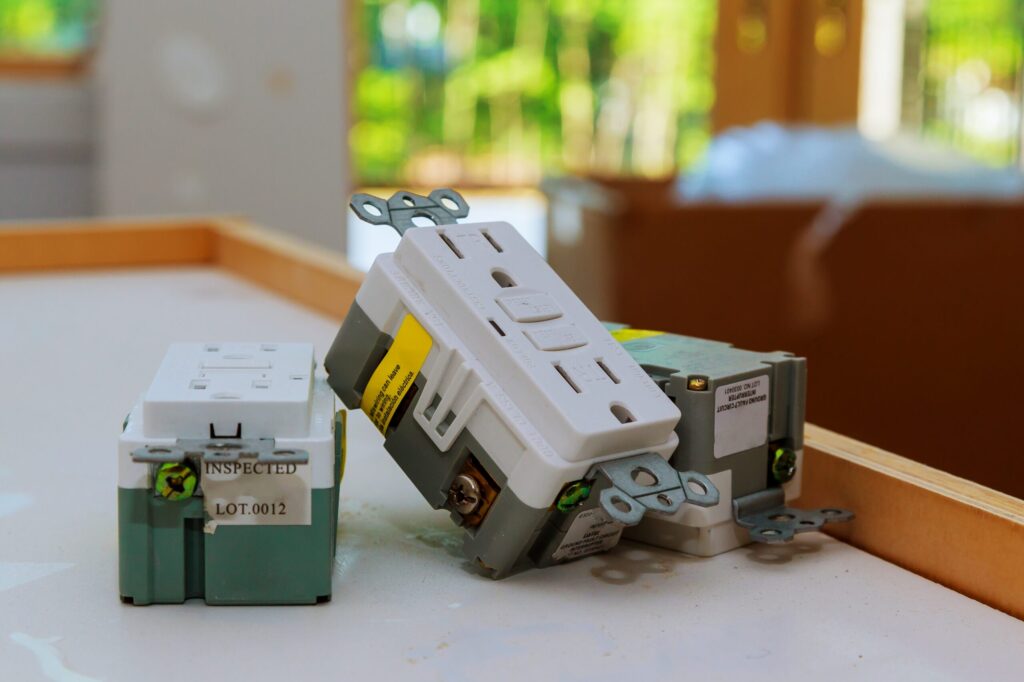
The code is very specific about where this protection is required. It includes all electrical receptacles in bathrooms, garages, unfinished basements, and crawl spaces. It also extends to all kitchen outlets that serve the countertop surfaces, as well as any outlets located near a laundry sink or a wet bar. Most importantly for our coastal and mountain environment, this requirement applies to all outdoor outlets, which are constantly exposed to rain and moisture. A ground fault in one of these damp or wet locations poses a significantly higher risk of a fatal electrical shock, and a GFCI is the primary defense against this hazard.
This violation is particularly common in older homes throughout the Felton area that were built before these codes were widely adopted. If you inspect the outlets in these required areas of your home and you do not see the distinctive “TEST” and “RESET” buttons that are characteristic of a GFCI receptacle, your home is not up to modern safety standards and your family is not adequately protected.
Violation #2: Improperly Installed or Outdated Smoke and Carbon Monoxide Alarms
California has some of the strictest laws in the country regarding the installation of smoke and carbon monoxide alarms, and for good reason. These devices are your family’s first alert in the event of a fire or a dangerous carbon monoxide leak. A very common code violation in older homes is the presence of outdated, standalone, battery-only smoke detectors.
The current California code has several key requirements for these life-safety devices. In most situations, they are required to be hardwired into the home’s electrical system and must also have a battery backup to ensure they will function during a power outage. Furthermore, they are required to be interconnected, which means that if one alarm in the home detects a hazard and sounds, all the other alarms throughout the house will sound as well. This is a critical feature that ensures everyone in the home is alerted, regardless of where the danger originates.
If your home is still protected by only a few scattered, battery-operated alarms, it is not in compliance with modern safety codes. This is a major safety issue that will almost certainly be flagged during a professional home inspection. Upgrading to a modern, hardwired, and interconnected smoke and carbon monoxide alarm system is one of the most important investments you can make in your family’s safety.
Violation #3: Overloaded Panels and Incorrect Breaker Sizing
Your main electrical panel is the heart of your system, but in many older homes, this heart is straining to keep up with the demands of modern life. A 100-amp panel, which was the standard for many years, can be easily overloaded by a household with central air conditioning, a full suite of kitchen appliances, and multiple electronic devices. A constantly tripping circuit breaker is a clear sign that your system is overloaded.

A very dangerous violation occurs when a homeowner or an unqualified handyman attempts to “solve” this problem by replacing a 15-amp breaker with a 20-amp breaker to stop it from tripping. This is a catastrophic mistake. The breaker is designed to be the “weakest link” to protect the wiring inside your walls. By installing an oversized breaker, you are allowing more current to flow through the wires than they are safely rated to handle. This can cause the wires to overheat, which can melt their protective insulation and ignite the surrounding wood framing, leading to a devastating fire.
Violation #4: Improperly Installed or Inaccessible Junction Boxes
The electrical code has a very clear and simple rule for all wire connections: every single splice or connection must be made inside an approved and properly covered junction box. A dangerously common violation, especially in homes with a history of DIY wiring, is the use of “flying splices.” This is where wires are simply twisted together, perhaps with a wrap of electrical tape, and are left loose and exposed in an attic, crawlspace, or behind a wall. This is a major fire hazard, as a loose connection is a primary source of dangerous electrical arcing.
Another related violation is making these junction boxes inaccessible. The code requires that all junction boxes remain accessible so that the connections inside can be inspected and serviced in the future. It is a violation to cover a junction box with drywall, insulation, cabinetry, or any other permanent finish. A professional electrician will always ensure that all connections are made within a proper box and that the box is located in an accessible area.
The Beach Electrical Solution: Ensuring Your Home is Safe and Compliant
The complexity and the constant evolution of the California Electrical Code are precisely why any significant electrical work in your home should only be performed by a licensed, insured, and experienced professional. At Beach Electrical, our entire team is committed to a culture of safety and an unwavering adherence to these critical standards.

We see our role as more than just installers and repair technicians; we are your dedicated home safety partners. The best way to get a true and accurate assessment of your home’s electrical safety and its compliance with the current code is with a professional electrical inspection. Our licensed electricians are highly trained to spot these common violations, from missing GFCI protection and outdated smoke alarms to the more hidden dangers of an overloaded panel or improper wiring in your attic. We are proud to serve the unique homes in the Felton and Santa Cruz County areas, and we have a deep understanding of the specific electrical challenges our local properties can present.
The electrical codes that govern the wiring in your home are a complex and essential framework designed with a single purpose: to protect your property and your family from the preventable dangers of electrical hazards. The most common code violations, from missing safety devices like GFCIs to the more hidden dangers of improper wiring and overloaded panels, can pose a serious and often silent risk. Ensuring your home is fully compliant with these modern standards is one of the most important steps you can take to create a safe living environment.
A professional electrical inspection is the only way to be completely certain that your home is free of these hidden dangers. We encourage all homeowners, especially those in older properties, to be proactive about their electrical safety. We invite you to contact the trusted and licensed experts at Beach Electrical to schedule a comprehensive electrical safety inspection. Let us provide you with the peace of mind that comes from knowing your home is safe, compliant, and powered for the future.